
Fumigation & marine / Wood heat treatment
ISPM 15 wood heat treatment in Dubai
Heat treatment and marking of pallets, crates and dunnage to the ISPM 15 standard for wood packaging material used in export consignments — no chemical residue, and the timber is marked on completion.
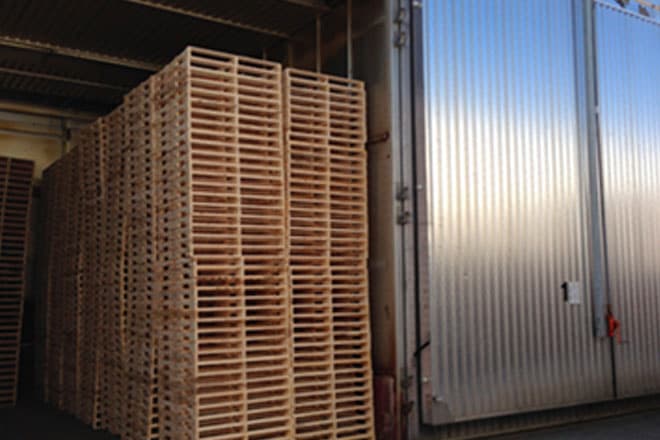
Treated to the ISPM 15 standard
Marked on completion
No chemical residue
Free quotation before booking
In short
ISPM 15 heat treatment raises the core temperature of wood packaging material to the level and duration required by the international standard, killing pests within the timber. Treated material is then marked with the ISPM 15 stamp, which is what customs authorities at the destination look for.
Overview
Why wood packaging is regulated
Wood packaging material — pallets, crates, cases, dunnage and bracing — moves between countries carrying whatever is living in the timber. Wood-boring insects transported this way have caused significant damage to forestry in importing countries, which is why the international standard exists.
ISPM 15 sets out treatment and marking requirements for that material. In practice it means that if your consignment travels on timber, the timber usually needs treating and marking regardless of what the goods themselves are.
Heat treatment is the common route because it leaves no chemical residue and suits timber destined to carry food, pharmaceutical and consumer goods. The mark is what clears customs, so material treated without correct marking does not help you.
At a glance
- Standard
- ISPM 15
- Applies to
- Pallets, crates, dunnage
- Method
- Heat, no chemicals
- Includes
- Marking on completion
- Residue
- None
What is included
What the treatment covers
The standard is specific about both the treatment and the mark. Both are part of the job.
Material assessment
Pallets, crates, cases, dunnage and bracing assessed for suitability — damaged or previously marked material is identified before treatment.
Heat treatment
Core temperature raised to the level and held for the duration the standard requires, which is what kills organisms inside the timber.
Monitoring
Core temperature monitored through the cycle, since it is the core figure the standard specifies.
ISPM 15 marking
Treated material marked in the format the standard requires. Unmarked material, however well treated, does not clear customs.
No chemical residue
Heat leaves nothing behind, which is why it suits packaging for food, pharmaceutical and consumer consignments.
Documentation
Records issued where the consignee or destination requires evidence beyond the mark itself.
How it works
How treatment is arranged
Timing against your packing schedule matters — treated material has to be marked before it is loaded.
- 1Tell us the volume and typePallet or crate type, quantity, dimensions and where the material is held. That sets the cycle and the quote.
- 2Suitability checkMaterial is checked for condition and existing marks, since damaged or already-marked timber affects what can be treated.
- 3Heat cycleCore temperature raised and held to the standard, monitored through the cycle at the core of the timber.
- 4MarkingTreated material marked in the required format, which is the part customs authorities actually check.
- 5Release for packingMaterial released for use, with records issued where the destination requires more than the mark.
Who it is for
Exporters, packers and pallet suppliers
If your consignment travels on timber, this applies regardless of what the goods are.
- Exporters shipping on pallets, crates or with timber bracing
- Packing and crating operations supplying export customers
- Pallet suppliers and poolers needing treated, marked stock
- Freight forwarders whose consignment has been queried over packaging
Cost
Priced on volume and schedule
Quoted against the quantity of timber and when it has to be ready, because treated material must be marked before it is loaded.
ISPM 15 covers the packaging
The standard applies to the wood packaging material, not to the goods inside. If your consignment travels on timber, it applies regardless of what you are shipping.
- 01Volume of timberPallets, crates, cases and dunnage are priced against the quantity going through the treatment cycle.
- 02Timber dimensionsCore temperature has to be raised and held throughout the profile, so thicker sections take longer to reach the standard.
- 03Turnaround requiredTiming against your packing schedule matters, since material has to be treated and marked before loading.
- 04MarkingEach treated item is marked on completion, which is what customs at the destination looks for.
- 05Collection or deliveryWhether material is brought to us or handled at your premises affects the arrangement.
FAQ
Wood heat treatment questions
The questions customers ask most before booking this service. If yours is not covered, call or message and a technician will answer it.
Do I need ISPM 15 for my shipment?
If the consignment travels on wood packaging material — pallets, crates, cases, dunnage or bracing — then generally yes. Processed materials such as plywood and OSB are treated differently under the standard.
What does the mark actually mean?
It records that the material has been treated to the standard and identifies the treatment provider. Customs authorities at the destination check the mark, so unmarked material does not help even if treated.
Is heat treatment better than fumigation?
For wood packaging it is usually preferred because it leaves no chemical residue, which matters for food, pharmaceutical and consumer consignments. Both routes exist under the standard.
Can you treat material we already own?
Yes, subject to a condition check. Damaged material and timber carrying existing marks are identified before treatment because both affect what can be done.
How long does treatment take?
The cycle is set by achieving and holding the required core temperature, which depends on timber dimensions and moisture. We confirm turnaround against your packing schedule when quoting.
Summary
Key points
- ISPM 15 applies to wood packaging, not to the goods inside.
- Core temperature and duration are what the standard specifies, not chamber temperature.
- Unmarked material does not clear customs, however well treated.
- Heat leaves no chemical residue, which suits food and pharmaceutical consignments.
- Damaged or previously marked timber is identified before treatment.
- Quotation is free and confirmed in writing.
Other fumigation & marine services
- Container Fumigation
- Vessel Fumigation
- Ship Sanitation Certificates
- Agricultural Commodity Fumigation
- Warehouse Fumigation
- Tobacco Fumigation
Not sure which applies? Call +971 55 293 1860 and we will tell you.
Get a wood heat treatment quote
Tell us the pallet or crate type, quantity and your packing date and we will confirm the cycle and turnaround.