
Construction site services / Site rodent control
Rodent control on construction sites in Dubai
Tamper-proof baiting and trapping across the site boundary, stores and waste compounds, with station positions and service records maintained for the project file and handover pack.
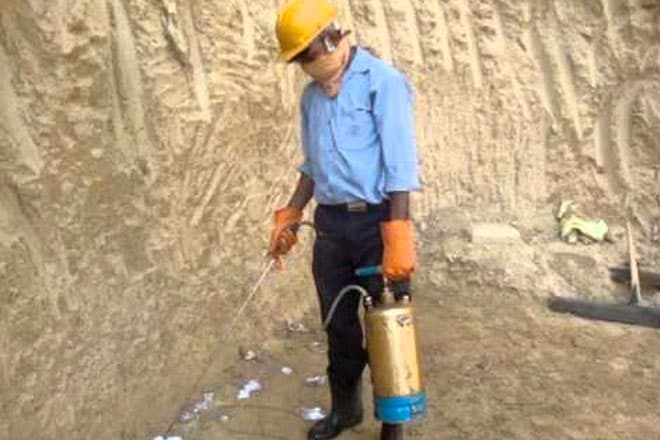
Scheduled against the build programme
Service records for the project file
Site induction and permit compliance
Out-of-hours attendance available
In short
Site rodent control places tamper-proof stations along the boundary, around stores, canteens and waste compounds, and services them on a schedule. Construction sites offer rodents food, harbourage and open ground, so the programme concentrates on the boundary and the waste stream, well upstream of individual sightings.
Overview
Why sites attract rodents
Rodents follow food, water and shelter, and a live site supplies all three in quantity. Canteen waste, stored materials, excavated ground, temporary drainage and an open boundary make a construction site materially more attractive than the buildings around it.
The boundary is where the programme starts. Rodents move in from surrounding land, open plots and drainage, so a line of serviced stations along the perimeter intercepts pressure before it reaches the welfare estate and stores.
Station positions and service history matter as much as the treatment. A main contractor needs to show where stations are, when they were serviced and what was found — both for inspection and for the handover pack.
At a glance
- Method
- Tamper-proof stations
- Focus
- Boundary and waste
- Servicing
- Scheduled
- Records
- Station positions logged
- Safety
- Locked stations only
What is included
What the rodent programme covers
Placement follows the survey, and every station position is recorded on a plan.
Perimeter stations
Tamper-proof stations along the site boundary and at access points, intercepting incursion from surrounding land and drainage.
Waste compound
The refuse area is usually the single largest attractant on site, and is covered with stations and a review of handling.
Canteen and messing
Food preparation and dining areas, plus the waste stream serving them, treated and monitored.
Stores and containers
Material stores and site containers, where packaging and consumables provide both food and harbourage.
Excavations and drainage
Burrows, temporary drainage and open chambers identified and treated, since these are where populations establish on site.
Station log and records
Positions mapped and service history recorded per visit, for inspection and the handover pack.
How it works
How the programme runs
Placement first, then scheduled servicing that adapts as the site changes shape.
- 1Survey and mappingThe boundary, waste compound, stores, canteen and excavations are surveyed, and station positions are planned and mapped.
- 2Station placementTamper-proof stations placed on runs and at pressure points, locked and positioned so site traffic does not disturb them.
- 3Scheduled servicingStations checked and serviced on schedule, with take recorded and positions adjusted as the site layout changes.
- 4Source reviewWaste handling, food debris and standing water reviewed at each visit, because these are what sustain the population.
- 5Records issuedA service record per visit with station positions and findings, maintained through to handover.
Who it is for
Main contractors and site management
Rodent programmes are usually a contractual requirement as well as a practical one.
- Main contractors with canteens, messing and waste compounds on site
- Projects adjacent to open plots, drainage or established rodent pressure
- Sites with labour accommodation requiring documented control
- Developers needing station records in the handover documentation
Cost
What sets the price
Priced on the boundary, the number of stations the survey calls for and how often they are serviced. The survey and the quote are free.
Usually a contractual requirement
On most projects a documented rodent programme is written into the contract as well as being practically necessary. The station map and the service records are what satisfy it.
- 01Boundary lengthStations follow the site boundary, so the perimeter sets the baseline number before anything else is considered.
- 02Number of stationsStores, canteens, waste compounds and known runs each add positions, and the survey decides where they go.
- 03Servicing frequencyStations are checked, recorded and restocked on a schedule that adapts as the site changes shape.
- 04Surrounding landSites next to open ground, water features or other live construction carry higher pressure from outside the boundary.
- 05ReportingStation maps, takes recorded per visit and trend reporting for the project file are part of the programme.
FAQ
Site rodent control questions
The questions customers ask most before booking this service. If yours is not covered, call or message and a technician will answer it.
Are the stations safe on an active site?
Stations are tamper-proof and locked, and positioned so site traffic and plant do not disturb them. Positions are mapped so they can be avoided during works and relocated when layouts change.
How often are stations serviced?
On a schedule agreed at the survey, adjusted to the site's pressure and phase. Take is recorded at each visit, which is what shows whether pressure is rising or falling.
What happens as the site layout changes?
Station positions are reviewed and relocated at each visit as excavations close, compounds move and buildings top out. The map is updated accordingly.
Do we get documentation?
Yes. A service record per visit with station positions, findings and actions, maintained through to handover for the project file.
Will baiting alone solve it?
No. On site, waste handling and standing water are what sustain the population. The programme reviews those at each visit because baiting a site that keeps producing food is endless.
Summary
Key points
- The boundary is where the programme starts — pressure comes in from surrounding land.
- Waste compounds are usually the largest single attractant on site.
- Stations are tamper-proof, locked and mapped.
- Positions are reviewed as the site changes shape.
- Waste handling is reviewed at each visit, not just the bait.
- Survey and quotation are free.
Other construction site services services
Not sure which applies? Call +971 55 293 1860 and we will tell you.
Get a site rodent control quote
Tell us the site boundary, the welfare estate and the waste arrangements and we will survey and quote a programme.