
Disinfection & sanitization / Deep sanitization
Deep sanitization in Dubai
Whole-space treatment combining surface application with fogging, for clinics, nurseries, schools and food premises — or after an outbreak, a handover, or a change of tenancy.
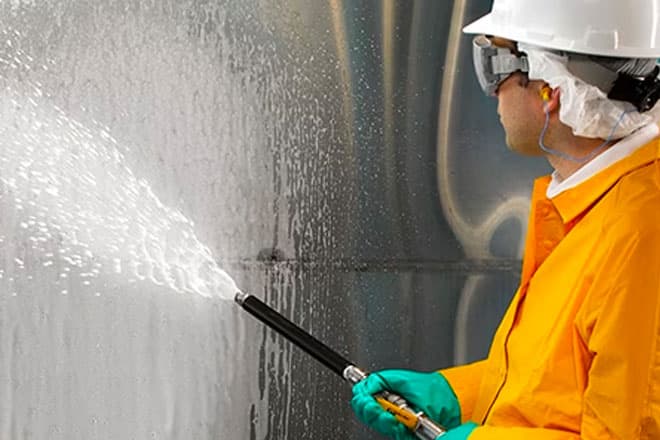
Surfaces and space treated together
Re-entry time stated before booking
Documented for inspection
Scheduled out of hours where needed
In short
Deep sanitization treats a whole space. Surface application covers touch points and fittings, then fogging distributes agent through the air and onto surfaces that cannot practically be wiped. The space must be vacated for a stated period before re-entry.
Overview
When whole-space treatment is the right scope
Surface disinfection deals with what people touch. Deep sanitization deals with the whole room, including the surfaces, voids and soft furnishings that cannot practically be wiped, and the air volume itself.
That makes it the correct scope in settings where the requirement is regulatory: clinics, nurseries, schools and food premises. It is also the right response after a confirmed outbreak, or at handover when a space changes occupant.
Because fogging requires the space to be vacated for a period, it is planned in advance and never dropped in. Out-of-hours attendance is usually the practical answer for premises that cannot close during the day.
At a glance
- Method
- Surface plus fogging
- Vacate?
- Yes, stated period
- Suits
- Clinics, nurseries, schools
- Timing
- Often out of hours
- Record
- Issued each visit
What is included
What deep sanitization covers
The whole space is treated. What varies is the agent, the method and the re-entry period.
Surface application
Touch points, fittings, worktops and sanitary areas treated directly with contact time observed, before any fogging takes place.
ULV fogging
Agent distributed as a fine mist through the air volume and onto surfaces that cannot practically be wiped.
Soft furnishings
Upholstery, curtains and fabric surfaces covered by the fog where they are within the treatment zone.
Agent selection
Low-residue agents where the space is a nursery, clinic or food area, with safety data sheets provided on request.
Re-entry control
The space is closed for the stated period and released only once it is safe to re-enter.
Service record
Areas covered, products used and date recorded, which is what a clinic, school or food premises produces at inspection.
How it works
How a deep sanitization runs
This is planned work, because the space has to be empty for a period.
- 1Scope and timing agreedWhich areas, what is in them, and when the space can be vacated. Out-of-hours attendance arranged where the premises cannot close.
- 2PreparationFood, equipment and sensitive items covered or removed, and the areas cleared as agreed before we start.
- 3Surface treatmentTouch points, fittings and worktops treated directly with contact time observed.
- 4FoggingThe space fogged room by room, then closed for the stated re-entry period.
- 5Release and recordThe space released once safe, and the service record issued for your file.
Who it is for
Clinics, schools, nurseries and food premises
Deep sanitization suits settings where the requirement is documented and inspected.
- Clinics, dental practices and medical facilities
- Nurseries, schools and childcare settings
- Restaurants, kitchens and food production areas
- Any space after a confirmed outbreak, a handover or a change of tenancy
Cost
How a whole-space treatment is priced
Priced on the volume of the space and the method it needs, because fogging treats air and surfaces together. The survey and the quote are free.
The planning cost
The space has to be empty for a stated period. On a clinic or a food premises that period is usually the expensive part, which is why out-of-hours attendance is the practical answer.
- 01Volume of the spaceFogging is calculated against the volume being treated, so ceiling height matters as much as floor area.
- 02The settingA nursery, a clinic and a food premises each carry different requirements for agent selection and documentation.
- 03Surface application as wellWhole-space treatment normally combines fogging with surface application to fittings and touch points.
- 04Vacancy windowThe space is out of use for a period that depends on the agent and the volume, and scheduling around that drives the arrangements.
- 05DocumentationA service record showing areas, products and dates is part of the job wherever the requirement is inspected.
FAQ
Deep sanitization questions
The questions customers ask most before booking this service. If yours is not covered, call or message and a technician will answer it.
How long must the space stay empty?
Fogging requires a stated re-entry period which depends on the agent and the space. We confirm it at the point of booking, so it can be planned around.
Can you work out of hours?
Yes, and for clinics, restaurants and schools that is usually the practical answer. Out-of-hours attendance is arranged as part of scheduling.
What do we need to do beforehand?
Cover or remove food, sensitive equipment and personal items, and clear the areas as agreed. We confirm the preparation list when the scope is set.
Is fogging safe around food areas?
Agents are selected for the setting, and food and open surfaces are covered or removed before treatment. Low-residue options are used in food premises and product details are provided on request.
Do we get documentation for inspection?
Yes. Each visit produces a service record showing the areas covered, the products used and the date, which is what inspections ask to see.
Summary
Key points
- Deep sanitization treats the whole space, not just touch points.
- Fogging requires the space vacated for a stated period.
- Surface application happens first, then fogging.
- Out-of-hours attendance is usually the practical option for live premises.
- A service record is issued for inspection purposes.
- Quotation is free and fixed in writing.
Other disinfection & sanitization services
Not sure which applies? Call +971 55 293 1860 and we will tell you.
Book a deep sanitization
Tell us the premises, the areas and when they can be vacated and we will quote it in writing.