
Fumigation & marine / Agricultural commodity
Agricultural commodity fumigation in Dubai
Grain, pulses, rice, seeds, spices and dried produce treated in store or in container against storage pests, with certification for onward shipment where the destination requires it.
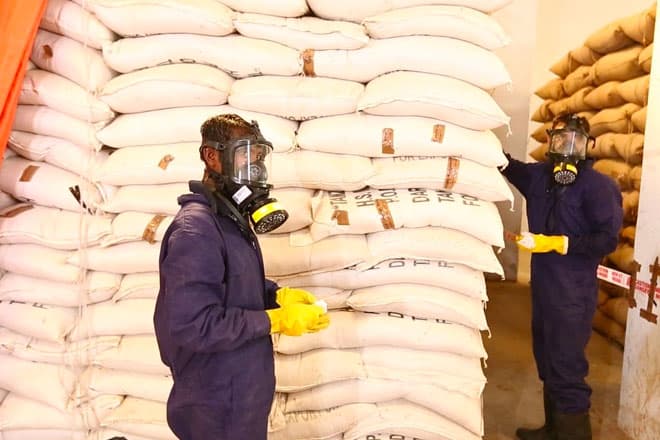
Treatment matched to the commodity
In-store or in-container
Certification for onward shipment
Free quotation before booking
In short
Agricultural commodity fumigation treats stored produce against storage pests such as weevils, grain borers and moths. The commodity is treated in store or in a sealed container, held for an exposure period set by the produce and the temperature, then ventilated and cleared before it is moved or shipped.
Overview
Why stored produce needs treating
Storage pests do not arrive with a shipment so much as travel with it. Weevils, grain borers, flour beetles and moths breed inside sacked and bulk produce, and in Dubai's temperatures a population can multiply through a storage period that would be uneventful in a cooler climate.
The loss is rarely the produce eaten. It is the rejected consignment, the downgraded quality certificate, the re-export at your cost, or the customer who finds insects in a retail pack. Treatment is cheaper than any of those.
Method depends on the commodity. Some produce suits gas fumigation directly; some needs treating in container; some is better handled by treating the store itself so new stock is not reinfested by the building.
At a glance
- Targets
- Weevils, borers, moths
- Setting
- Store or container
- Timing
- Commodity dependent
- Includes
- Exposure and ventilation
- Output
- Treatment certification
What is included
What commodity treatment covers
What gets treated depends on the produce, the packaging and where the consignment is going.
Commodity assessment
Produce type, packaging, stack configuration and current infestation level assessed before a method is chosen.
Sealing the space
Sheeting a stack, sealing a chamber or sealing a container so the gas is retained for the full exposure period.
Controlled exposure
Exposure set by commodity and temperature. That is what determines whether pests inside the stow are reached.
Ventilation and clearance
The space is ventilated and cleared before produce is handled, moved or loaded.
Store treatment
Where the building itself is the reservoir, racking, voids and fabric are treated so incoming stock is not reinfested.
Certification
Treatment certification issued for onward shipment where the destination or consignee requires it.
How it works
How commodity treatment is arranged
Getting the commodity details right at enquiry is what prevents both damage and a rejected certificate.
- 1Send the commodity detailsProduce, packaging, quantity, location and destination. That determines the method, the exposure and the paperwork.
- 2Method confirmedWe confirm whether the produce suits gas treatment in store, treatment in container, or an alternative method, and quote accordingly.
- 3Sealing and dosingThe stack, chamber or container is sealed and dosed against volume, commodity and temperature.
- 4Exposure heldThe exposure period is held in full. Cutting it short is the usual reason a treated consignment still arrives infested.
- 5Clearance and certificationVentilated, cleared, released for handling, and certification issued for onward movement.
Who it is for
Traders, importers and warehouse operators
Commodity treatment applies wherever produce is stored long enough for a storage pest population to build.
- Traders and importers holding grain, rice, pulses, seeds and spices
- Warehouse and cold store operators handling dried produce
- Exporters shipping to destinations that require treatment certification
- Anyone whose consignment has been flagged or held on inspection
Cost
Priced on the consignment
Quoted against the volume, the commodity and where the consignment is going, because the destination decides the documentation.
Get the commodity details right
Telling us exactly what is in the consignment and where it is bound is what prevents both damage to the produce and a rejected certificate at the far end.
- 01Volume treatedGrain, pulses, rice, seeds, spices and dried produce are priced against the quantity and how it is held.
- 02PackagingBulk, sacked and palletised consignments each behave differently under gas and need different exposure.
- 03In store or in containerTreatment in a warehouse and treatment in a sealed container are different arrangements.
- 04Destination requirementsWhat the importing country expects sets the certificate issued and sometimes the method itself.
- 05Exposure periodSet by commodity and temperature. There is no nominal figure, and the window has to fit your shipping date.
FAQ
Agricultural commodity questions
The questions customers ask most before booking this service. If yours is not covered, call or message and a technician will answer it.
Which pests does this target?
Storage pests — grain weevils, lesser grain borer, flour beetles, saw-toothed grain beetle and storage moths. These breed deep inside sacked and bulk produce.
Will fumigation affect the produce?
The method is chosen for the commodity precisely so that it does not. Telling us exactly what the produce is, and how it is packed, is what allows the right choice to be made.
Can you treat in our own warehouse?
Yes. Stacks can be sheeted and treated in store, or the store itself treated where the building has become the reservoir reinfesting new stock.
Do I get a certificate?
Where the destination or consignee requires treatment certification, yes. We confirm the requirement before treatment so the document issued is the one that will be accepted.
How do I stop it happening again?
Treat the store as well as the stock, rotate stock properly, keep the building dry, and clean down between consignments. Residues in racking and voids are the usual source of reinfestation.
Summary
Key points
- Storage pests breed inside sacked and bulk produce, not just on the surface.
- Method depends entirely on the commodity and how it is packed.
- The store itself can be the reservoir reinfesting new stock.
- Exposure must be held in full or the treatment fails.
- Certification is confirmed against the destination's requirement first.
- Quotation is free and confirmed in writing.
Other fumigation & marine services
- Container Fumigation
- Vessel Fumigation
- Ship Sanitation Certificates
- Warehouse Fumigation
- Tobacco Fumigation
- Wood Heat Treatment
Not sure which applies? Call +971 55 293 1860 and we will tell you.
Get a commodity fumigation quote
Send the produce, packaging, quantity and destination and we will confirm the method and the certification.